Detroit Art Review

Critical art reviews of Detroit galleries and museums weekly

Susan Yamasaki @ Muskegon Museum of Art

Material World: Ten Women is an invitational exhibition that features women artists working with non-traditional materials or using traditional materials in non-traditional ways. The exhibition highlights the use of the physical characteristics of material and technique as a component of both visual and conceptual themes.

Many of the works use found objects common to the everyday household, or bring elements from nature into inside spaces. Painting, sculpting, weaving, and assemblage merge in surprising ways throughout the show— crocheted metal wire is transformed into complex organic shapes, steel rod is welded into traditional vessel forms and animal shapes, paintings are cut apart and reassembled on the loom, birch bark becomes quilt-like in complex geometric arrangements, and quilts become soft sculptures and drawings, amidst many other approaches that surprise and delight.

This review will highlight the artwork of  Susan Yamasaki, whose work combines the materials of birch bark and gold leaf.   The bark is gathered from decomposing trees, then washed, flattened, and cut into pieces. The pieces are arranged and nailed to a birch plywood panel.  The designs are abstract, telling a story of transformation. The panel becomes a devotional object, honoring this living link between earth and sky. The panels pay homage to the struggle and adaptability of each tree. The colors reveal the diversity and the beauty of the tree’s experience.

In the Japanese tradition of Kintsugi, gold leaf makes whole the imperfections of the bark. In the traditional Byzantine devotional objects and icons, the gold leaf heightens the panel’s presentation as a sacred object.
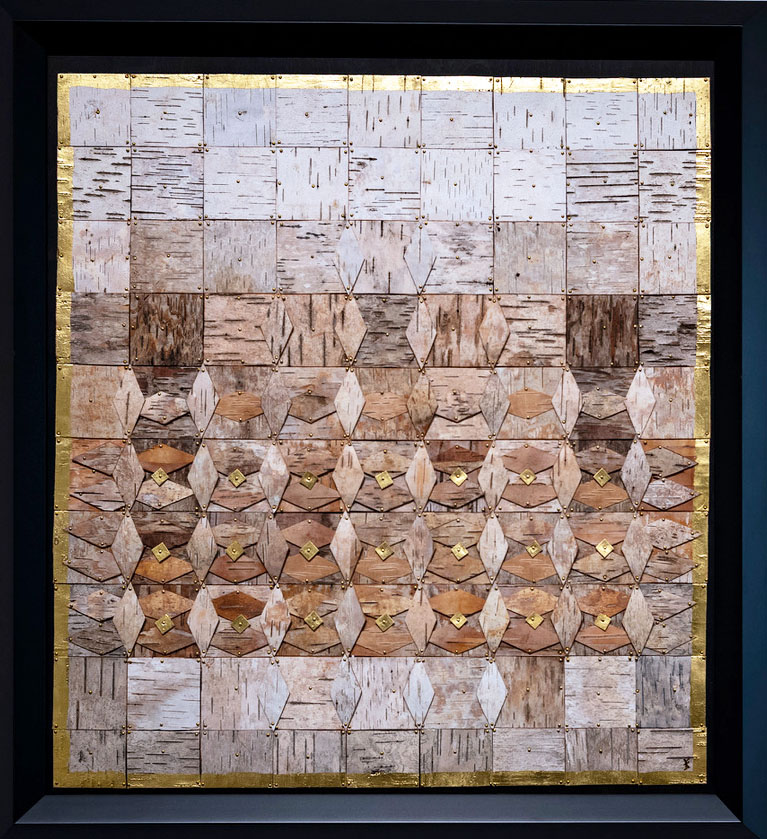
Susan Yamasaki No. 66. Rhombus 28’x30 ” Birch bark and gold leaf, 2025.

She says here in her statement:

My work begins in the forests of Northern Michigan, where the landscape is constantly shifting, and there is a natural die-off of trees by wind, erosion, and disease. When a tree dies, it continues to provide shelter and food for insects, animals, and fungi.  As time goes on, a dead tree’s skin can easily be lifted or peeled away, revealing the dark, loamy humus that the tree has become. Birch tree bark, in particular, is quite resistant to decomposition. It remains strong and beautifully maps a tree’s experience.  Colors in the bark may show where the sun hit the trunk year after year, or disclose the mineral content of the soil where it stood.  There might be indications of a forest fire, a year of drought, or a woodpecker’s work.

These remnants of a birch tree’s life are the materials I work with.

After weeks of collecting, I wash, flatten, and cut the bark into squares. Then I arrange and rearrange the pieces before nailing them to a plywood birch panel. In the process, this once living material continues to tell a story, a story of transformation.  The panels become sacred objects, honoring the link between earth and sky.  They pay homage to the struggle and adaptability of each tree. They honor and bring to focus the diversity, the strength, and the beauty of our natural world. Gold leaf is used in the tradition of Byzantine devotional objects and icons. 
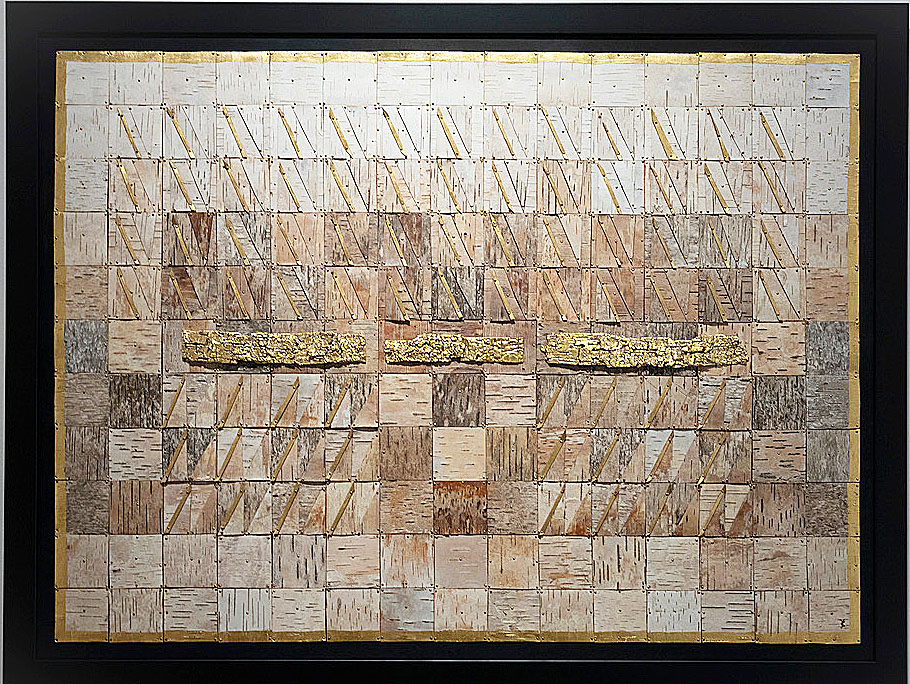
Susan Yamasaki, No. 70 Three Gold Bars,  33×43″,2025.

Yamasaki’s artwork, Three Gold Bars,  is a geometric composition created from birch bark pieces that contrast in that the material is organic from cut pieces of birch bark, juxtaposed to a symmetrical and balanced arrangement of squares on the top and bottom, with an intricate collection of shapes at its core center. The three gold bars become a more essential element in the composition.  The abstraction is one of the most complex sets of designs that keep the viewer engaged.
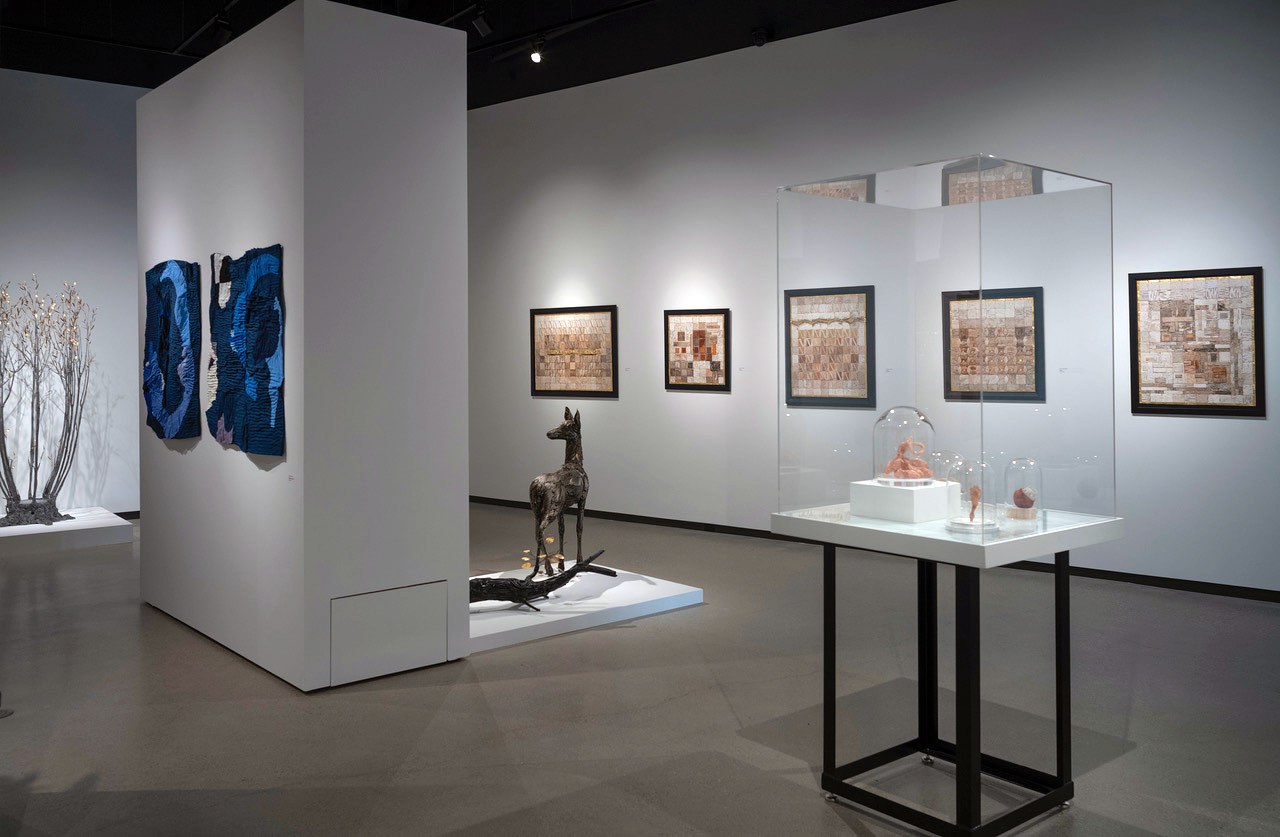
Installation image from, Material World – Ten Women” 2026.
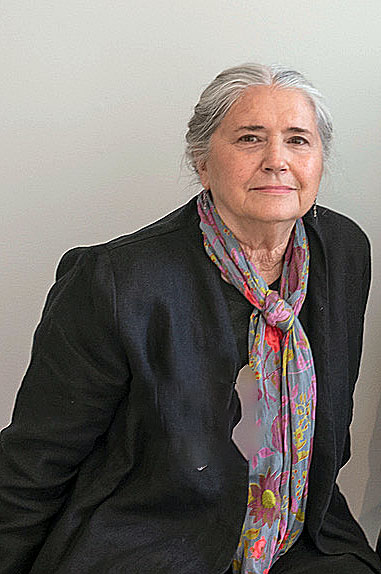
Susan received her BA in Art History after studying art at Michigan State and Wayne State University. She studied sculpture at Académie de Feu, Sainte-Just-en-Chaussee.  She later earned a Master’s degree in child development from Oakland University. She is currently retired after a long career in teaching.  She and her husband, Taro, reside north of Traversity Michigan.  Images were taken and provided by Taro Yamasaki.


May 21, 2026 – August 23, 2026

FEATURED ARTISTS Click the artist’s name for their full bio

EXHIBITION SPONSORS

Susan & Frank Bednarek
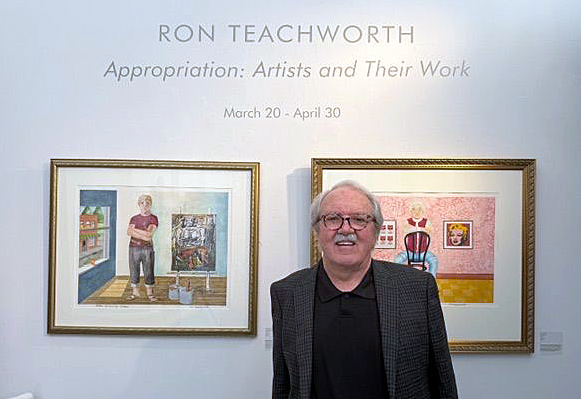
Ron Teachworth – Artist Series: Art Appropriation @ BBAC

The installation of Ron Teachworth’s – Appropriation: Artists and Their Work, is currently at the Birmingham Bloomfield Art Center, through April 30. (All photos by Detroit Art Review except where noted.)

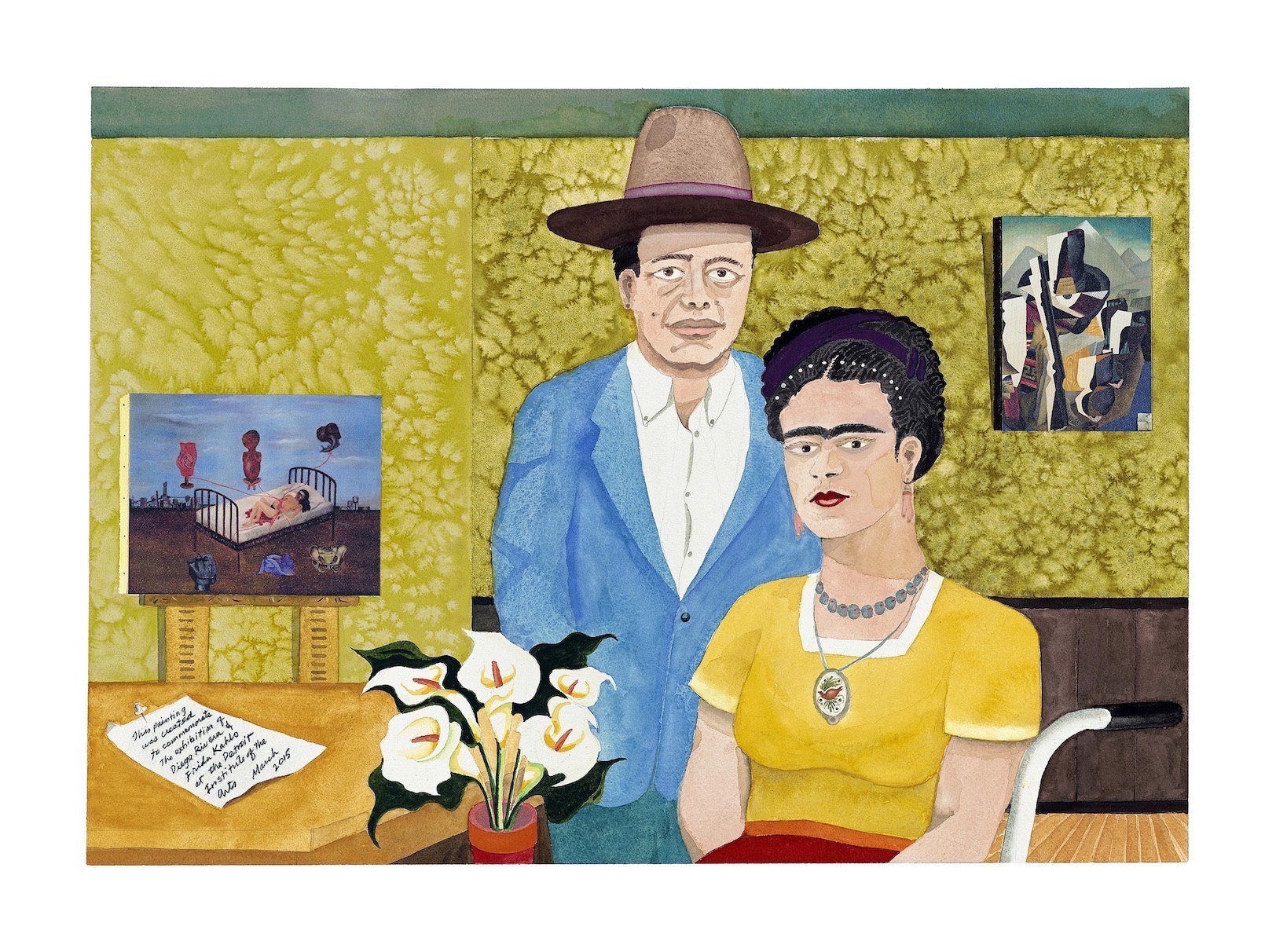
Artistic appropriation is a distinguished 20th-century practice, going back at least to Marcel Duchamp’s presentation of a porcelain urinal as an objet d’art, a metamorphosis famously extended by Andy Warhol to Campbell’s soup cans. With Appropriation: Artists and Their Work, up through April 30 at the Birmingham Bloomfield Art Center, painter Ron Teachworth gives this transformational practice a literal and engaging twist, with portraits of artists in front of prints of some of their most famous works.

Stylistically, these watercolors get much of their punch from juxtaposition: Teachworth renders the artists themselves, from Frida Kahlo to Picasso to Georgia O’Keeffe, in naïve, almost primitivist fashion, while their artworks behind them are actually tiny giclée prints – high-quality, inkjet reproductions of images – using archival adhesive, attached to the canvas surface.

Appropriation is hung in BBAC’s Ramp Gallery, an inclined corridor that, because of its intimacy, works particularly well for this show. You can spin around from Frida Kahlo to confront Wassily Kandinsky, just four feet away on the opposing wall. It all makes for an excellent compare-and-contrast exercise in an exhibition that, at heart, is an extended homage from a local artist to some of the great creative forces of the 20th century.

Ron Teachworth, Diego & Frida, Watercolor, 22 x 30 inches.

Diego & Frida turned out to be the catalyst for Appropriation’s other artist portraits, though at the time he executed it, Teachworth had no inkling it would turn into a series. “I wasn’t thinking about art appropriation or anything,” he said. “I just liked that show at the DIA, went to it a couple of times, and wanted to celebrate the two of them.”

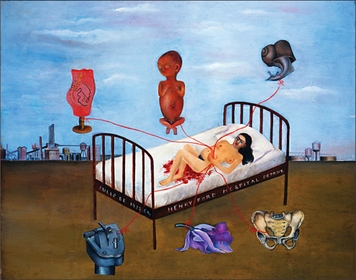
Frida Kahlo, Henry Ford Hospital, Oil on metal, 12 x 15 inches, 1932. (Courtesy of Dolores Olmedo Museum, Mexico City.)

Teachworth, who taught art and film for years in the Utica Community Schools and later at Oakland Community College, is something of a creative polymath, with several books to his credit and a 1983 feature film, Going Back. His artwork has been in any number of shows locally as well as in Pennsylvania and New York, and he also had an exhibition of paintings from Christ’s life that showed at Detroit’s Marygrove College and St. Mary’s of the Hills in Rochester. Additionally, in 2014, Teachworth got into the publishing business by founding the Detroit Art Review

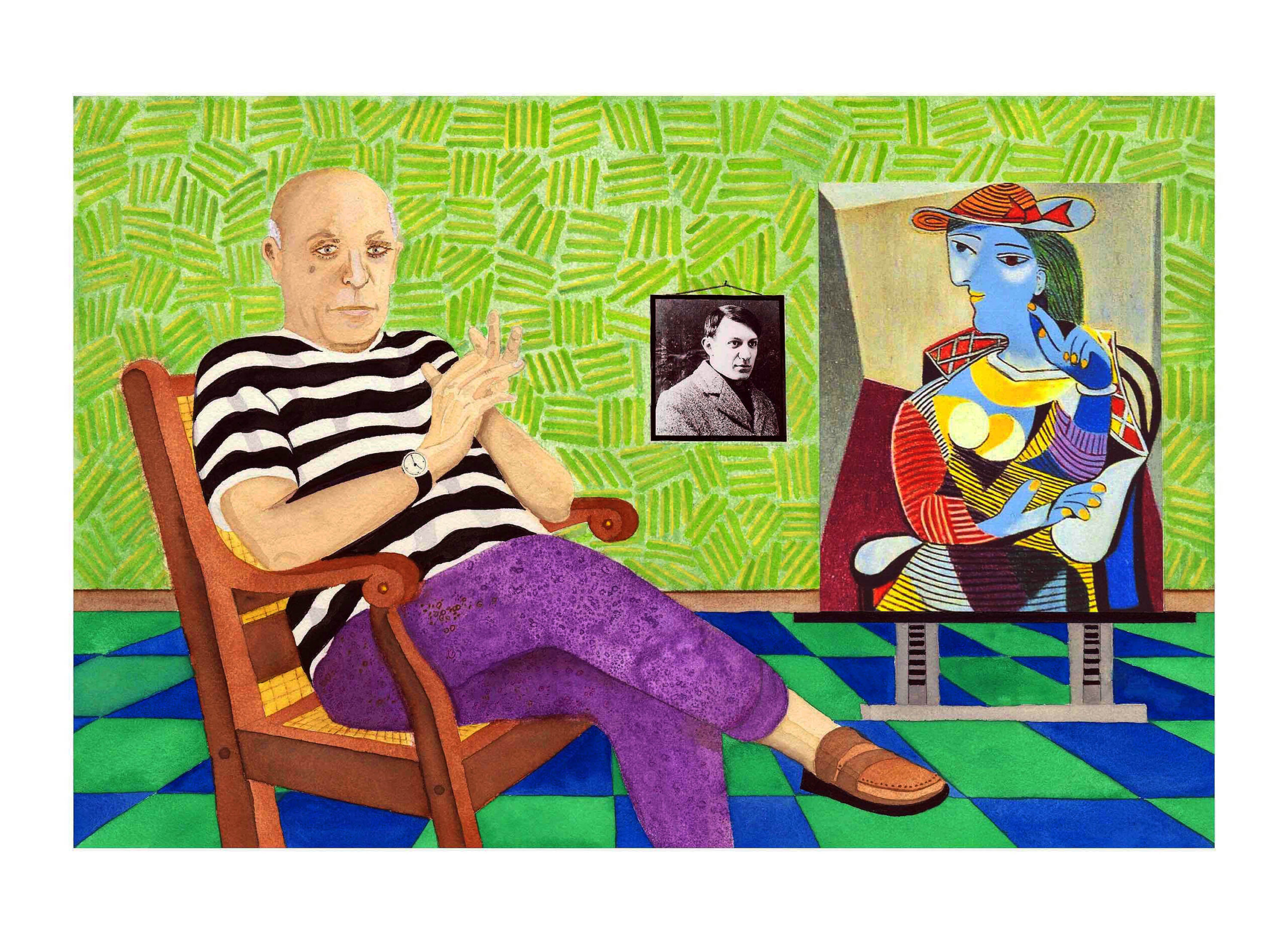
Ron Teachworth, Picasso, Watercolor, 22 x 30 inches.

Pablo Picasso in a black-and-white striped shirt stares out at the viewer from one of the most colorful canvases on display, framed by lime-green walls and a dark-blue and dark-green checkerboard floor. To the right on the wall is a black-and-white picture of the young Picasso (when he still had hair), and, on an easel, sits a large canvas, Seated Woman (Marie Therese), a Cubist portrait of the Spaniard’s lover.

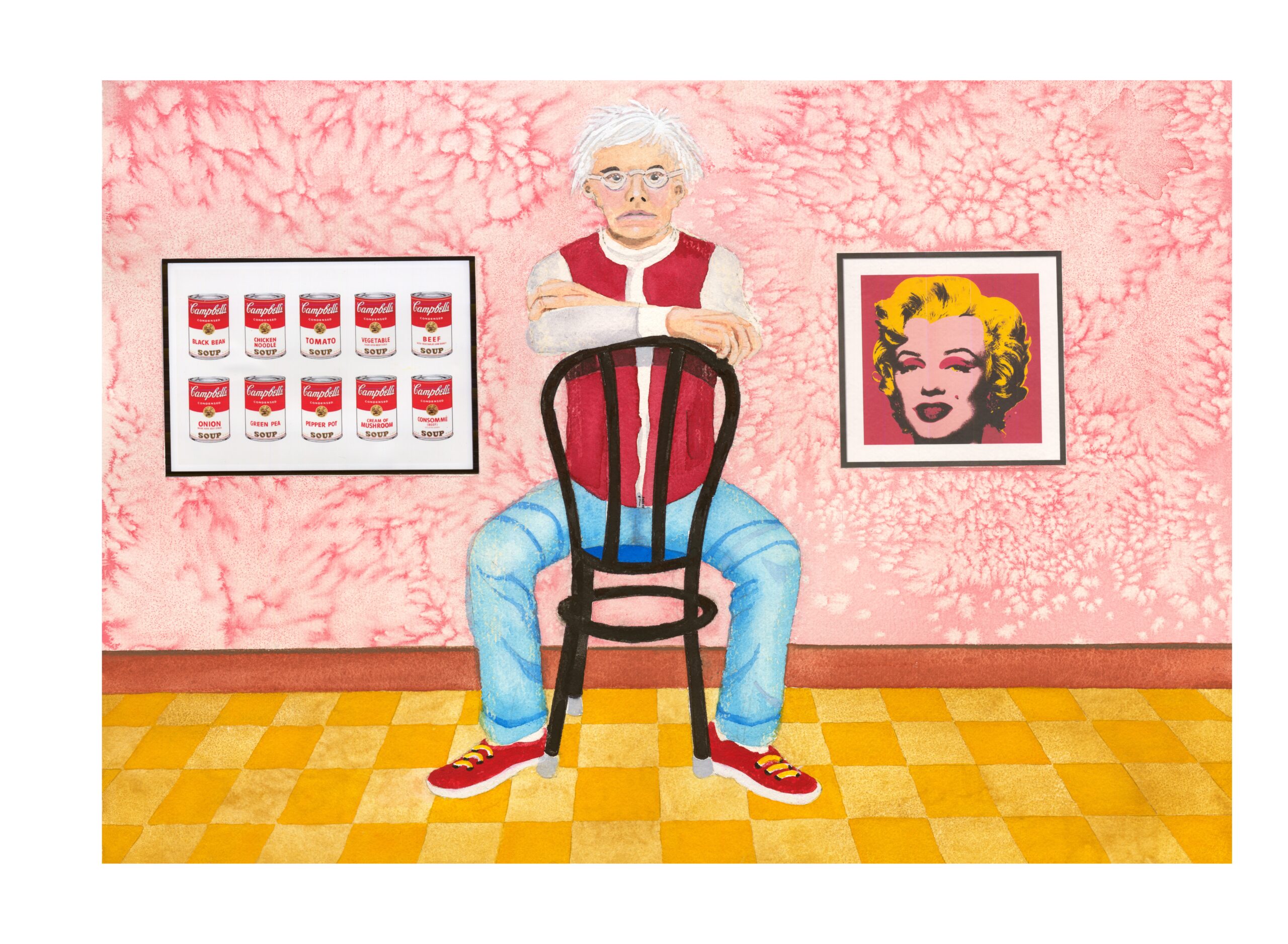
Ron Teachworth, Andy Warhol, Watercolor, 20 x 30 inches.

Pop-art celebrity Andy Warhol inhabits another color-filled frame, sitting astride a chair turned backward, his arms resting on its curved back. Red and pink dominate here, making the figure of the artist, with his white-blond hair, red vest, and red sneakers, pop out against the rosy wallpaper behind him. Continuing this theme on the left is the famous painting of the 10 Campbell’s soup cans, with their crimson-and-white label, and to the right, one of his portraits of Marilyn Monroe with incongruous red eye shadow and a red background.

Teachworth’s other artistic subjects include Georgia O’Keefe, Romare Bearden, Edward Hopper, William DeKooning, Andrew Wyeth, and Basquiat. In a helpful nod to the fact that not everyone will be familiar with every artist, Teachworth has added short biographies to the labels accompanying the works.


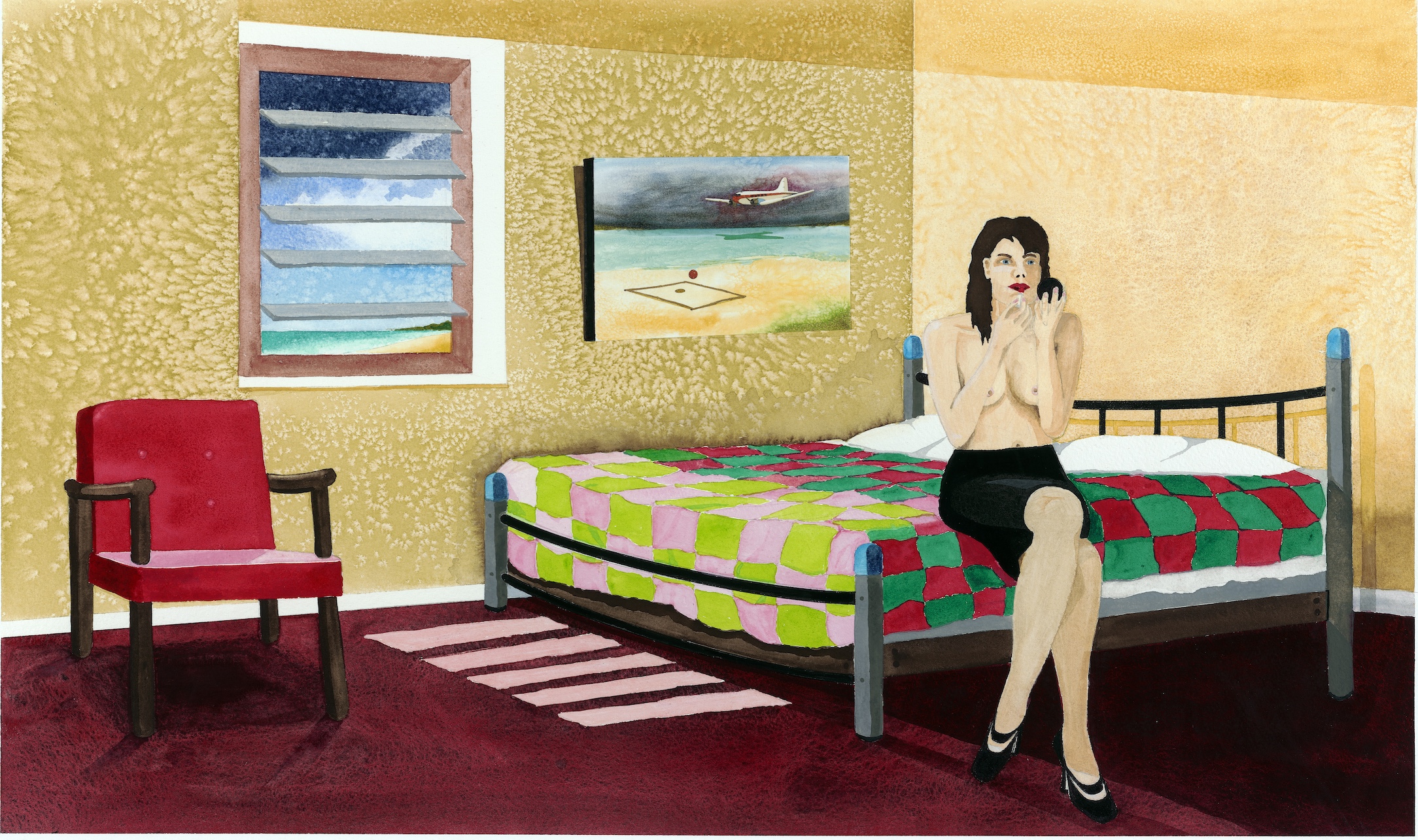
Ron Teachworth, Lipstick, Watercolor, 22 x 33 inches

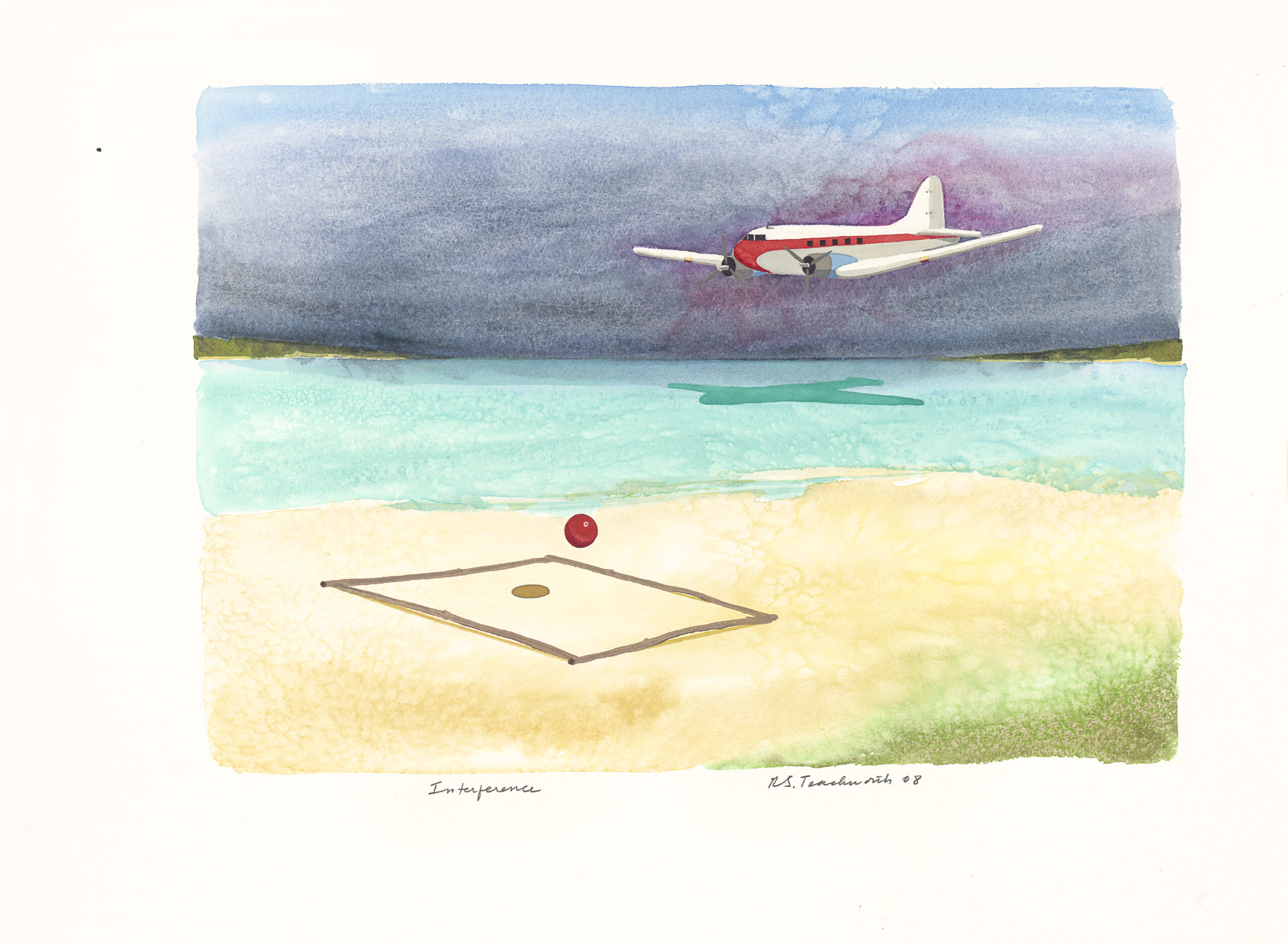
Ron Teachworth, Interference, Watercolor, 22 x 30 inches.

The one exception to this parade of artists is also one of the show’s most enigmatic works. In Lipstick, a pretty young brunette wearing a black skirt but no top sits on the edge of a bed covered by a colorful quilt, peering at a hand compact and applying ruby-red lipstick. The bedroom, which appears to be in the tropics judging by its slatted-glass window and a hint of aqua water beyond, reads like a set from some 1950s film noir.

And here, Teachworth the artist exploits his own artwork. Hanging to the left of the half-dressed woman intent on her cosmetics is a painting of a prop plane seemingly about to land on a sunny beach – a miniature giclée replica of Interference, Teachworth’s canvas hanging immediately to the left. It seems only fitting, and rather witty, that if the author is going to appropriate from others, he ought to dish out the same treatment to himself as well.

 Ron Teachworth – Appropriation: Artists and Their Work, will be up at the Birmingham Bloomfield Art Center through April 30.


Michigan Water Color Society 78th Annual Exhibition @ PCCA

The 78th Michigan Water Color exhibition and awards is now on display at the Paint Creek Center for the Arts, through February 15, 2026.  The traveling show is made up of 30 of the award winning work and will travel through out the state at five locations: Downriver Council for the Arts, February 19 – March 21, 2026, Village Arts Factory, April 2-28, 2026.

The Michigan Watercolor Society (MWCS)’s Awards Travel show is a collection of the top 30 award winning pieces selected from their most recent Annual Exhibition. MWCS Awards Travel Exhibition has a long history of sharing the best of the best from the annual exhibition to areas around the State of Michigan. For the 78th Annual Exhibition, Paint Creek Center for the Arts is hosting the fourth stop of this travelling show, with an opening reception that opened on January 23, 2026..

Michigan Water Color Exhibition Paint Creek Center for the Arts, Installation image


Stan Meyers, Trish’s Clothesline No. 3, 30×22″ Watercolor, Best of Show, Gold Award.

The watercolor, by artist Stan Meyers from Rockford, Michigan with the title, Trish’s Clothesline, No. 3 was given the Best in Show award. The watercolor is 30×22″ demonstrates how negative space is effectively used to dominate the space using existing paper to deliver the white sheet and clothing.  The juror, Cuck McPherson, says “There is a variety of styles, abstract, point of view, realism, conceptual, and graphic.  The MWCS did not disappoint.

In this painting, the composition takes the viewer back to the horizon, while leaving the empty clothes basket front and center, waiting for the owner to return.

Jerry Bowman, Happy Cricket, Watercolor, 32×36″

Abstraction and graphic design battle it out in the large 32×36″ watercolor with black line.  It is easy to image this painting acting as an illustration for a children’s short story.


Lori Zurvalec, Fragmented Leaves, 22×30″ watercolor.

Lori Zurvalee, reminds this viewer of Paul Cezanne, the French Post Impressionist painter who bridged the gap between 19th century Impressionism and 20th century Cubism. His unique style, characterized by small brushstrokes and planes of color, is credited with launching Modernism. 

Coming up at the PPCA:

2026 Members Biennial

Occurring every other year, the Members Biennial exhibition showcases artwork from Michigan resident artists who have contributed to, and shown support for, Paint Creek Center for the Arts’ mission through the purchase of an annual membership.   Member artists are invited to submit work in a broad range of themes and subject matter, so long as it suits the all-ages nature of PCCA’s public gallery space. The Opening Reception: May 8, 2026 from 5pm – 8pm

Haas Brothers: Uncanny Valley @ Cranbrook Art Museum

Uncanny Valley,” installation, Cranbrook Art Museum

If there were any doubt that we now live in an age of peak aesthetic pluralism, the exhibition “Uncanny Valley,” at the Cranbrook Art Museum, has thoroughly laid that doubt to rest. The eccentric chairs, benches, vases, lamps and rugs of the Los Angeles-based twin brothers Nikolai and Simon Haas live at the intersection of lowbrow mass culture and highbrow fine art. The brothers’ aggressively accessible work will be instantly comprehensible to contemporary audiences while at the same time eliciting the uneasiness referenced in the exhibition’s title.

The term uncanny valley refers to a psychological theory hypothesizing that the closer an inanimate object comes to resembling a human being, the more disturbing that resemblance becomes. The idea is particularly applicable to new technologies like 3D computer animation and artificial intelligence and is relevant to the work of the Haas brothers as a loose analogy to the uneasiness the exhibition may produce in gallery visitors.  In this instance, the “uncanny valley” is the queasy feeling engendered when pop-adjacent artworks are presented as fine art. The artists openly—even gleefully–borrow imagery from animations like the television show “Futurama,” among other mass market cultural products, to create work that is easily grasped by the general public, yet difficult to define taxonomically in art world terms.

The main gallery is devoted to a number of quasi-installations that elide the difference between architectural furnishings, taxidermized representations of unknown animal species and sculpture. The impressively crafted chairs, lamps, benches and other objects often combine luxurious materials, such as art glass, marble, fine wood and bronze, with fake fur, polyurethane and light bulbs.  The resulting embodied critters are intentionally silly, sexy and disarming while suggesting a subversive, slightly sinister undercurrent.

The titles of the pieces are relentlessly punning, sometimes profane and often named after celebrities. Thus, we get Needle Juice and Hugs Bunny, Titty Slickers and Mary Tyler Spore.  The jokey (and occasionally smutty) labels are good for a chuckle as we stroll through the galleries.

Jean Luc Pi-guard, 2016, (r.)Brooke Shield, 2016, Icelandic sheepskin, silver-plated bronze, hand carved ebo

As we enter the main gallery, two enormous, yeti-like beings hulk along the wall, their sharp, ebony horns and silver-plated claws contrasting with their cozy white fur.  Jean Luc Pi-guard and Brooke Shield (as they are called) imply both friendliness and lethality. Other artworks, like the lamp James Pearl Jones and the bench and table set Bend Affleck & Giraffe-ael Warnock, show off the artists’ skills as wood and stone carvers. Nearby, an enormous black, horned and fanged creature, King Dong, sits atop a low pedestal and towers over a collection of smaller furry and fantastical figures.

“Uncanny Valley,” installation (with King Dong), Cranbrook Art Museum

The museum’s side gallery holds yet more denizens of the Haas brothers’ fertile imagination. Working in cooperation with craft collectives in South Africa and California, they have fabricated a group of intricately beaded creatures and one mighty, exotic tree. One of the most amusing and conceptually satisfying collections in this section is a series of smallish wool rugs that represent mostly extinct animals, their flatness calling to mind roadkill.  Cheetah Hayworth, LaBrea Brad Pitt, Quasidodo, and Taz Been represent (respectively) a flattened cheetah, a deceased mastodon, an extinct dodo and an expired Tasmanian devil.  Just outside the gallery doorway, computer-generated “paintings” show backlit landscapes that capture the twilit sweep of costal California, framed by freeform, fleshy pink polyurethane surrounds.

(foreground l. to r.) Gator Tots, 2019; Mouth-ew-Broderick, 2019, glass beads, wire, mixed fiber stuffing, (background l. to r.) Needle Juice, 2018; Thorn Hub, 2018, velvet, brass, poly-fil fiber

Some art scolds might question the status of the work in “Uncanny Valley” as fine art, but the impressive craftsmanship, luxe materials and large scale of many objects in the collection argue persuasively that the Haas’s artworks are indeed museum worthy. In this age of aesthetic flux, it may not pay to be overly dogmatic, and we might benefit by letting go of pre-conceived ideas in favor of a more experimental—and playful–approach to art. Perhaps we don’t need to insist on identifying these artworks as either kitschy toys or rarified cultural objects of lasting value, but can say “yes” to it all.

Mulholland, 2023, Java drawing program, QLED screen, 3-d printed ABS, polyurethane, enamel

The exhibition was organized by the museum’s Chief Curator Laura Mott, with the assistance of Katy Kim, Jeanne and Ralph Graham Curatorial Fellow.  “Uncanny Valley” will be traveling to other museum venues throughout the U.S. in 2026.  A 256 -page catalog of this midcareer retrospective of the Haas brothers’ work is available for sale at the museum.

(from left) Cheetah Hayworth, LaBrea Brad Pitt, Quasidodo, Taz Been, 2017, wool rugs

Haas Brothers: Uncanny Valley @ Cranbrook Art Museum  November 2, 2025 – February 22, 2026

[adrotate group=”2″]

Seen/Scene @ The Shepherd

Installation, Seen/Scene, Installation,  curated by Nick Cave and Laura Mott, The Shepherd. Amalgam (inflate), virtual sculpture by Nick Cave in right foreground, photo courtesy of the Shepherd

For those of us who missed the landmark city-wide event “Here Hear” in 2015, the original creators have staged an exhibition at the Shepherd in 2025 that is both an anniversary and a debut. In the newly opened exhibition “Seen/Scene,” Nick Cave, master of the kinetic wearable and Laura Mott, Chief Curator of the Cranbrook Art Museum, celebrate the ten-year anniversary of a seven-months-long art fest that created a living portrait of the city in motion and in performance. Seen/Scene revisits some of the same themes, while also re-examining Detroit’s identity, present and future, with work from artists (many of them with Detroit connections) from the collection of Jennifer Gilbert.

The human figure is the focus of “Seen/Scene” and through that lens we examine the act of looking and seeing itself.  Reflective and refractive surfaces abound, adding conceptual complexity and introducing questions of perception and distortion. We, the audience, are challenged to observe the community and our neighbors as we have changed over the previous decade, with particular attention to the Little Village neighborhood surrounding the newly opened Shepherd.

Akea Brionne, Last Communion, 2023, jacquard textile, rhinestones, thread and poly-fil, photo courtesy of The Shepherd

Just inside the front door of the gallery, Akea Brionne’s fiber piece Last Communion succinctly describes the parameters set by the curators. A solitary bedazzled figure, masked, looks sidelong out of the picture frame, flanked by two walls that angle onto a surreal beach. On the right side, a framed face emerges, and three more framed selves recede into the distance, where the silhouette of the foreground figure is repeated. On the left, we see that same figure through an open window. The self and the process of looking and seeing, in both the optical and spiritual sense, are thus neatly encompassed.

Barkley Hendricks, Yocks, 1975, acrylic on canvas, photo courtesy of the Shepherd

  1. Jammie Holmes, Wearing Fur Coats in America, 2021, acrylic and oil pastel on canvas, photo courtesy of The Shepherd


Mario Moore, It Can All Be So Fleeting, 2024, oil on linen, photo courtesy of The Shepherd

In the first gallery, three large paintings pinpoint the psychological states of African American men past and present. Yocks a 1975 painting by Barkley Hendricks, shows a pair of well-dressed men self-presenting as cool and confident against a blank white background. We are only allowed to know what they choose to tell us. By contrast, the man in the adjacent 2021 painting Wearing Fur Coats in America, by Jammie Holmes, shows the subject set in a domestic scene that clearly shows him within his cultural milieu, and describes his social position. His direct gaze is matter-of fact, without the posturing of the subjects in Yocks.

An adjacent self-portrait by Mario Moore projects the anxiety of the newly successful. Elegantly dressed but uneasy, the artist gazes at the viewer from a gallery where he should feel at home. But the title of the painting describes his apprehension: It Can All Be So Fleeting. As if to drive home his point, Moore has inserted, on the gallery wall behind the subject, an image of a painting similar to George Bellows’ lithograph The White Hope(1921), in which Jack Johnson, the first Black American world heavyweight champion defeated a white opponent, James K.  Jeffries. The 1910 event precipitated race riots in over 50 American cities.

Rashid Johnson, Untitled Anxious Audience, 2018, ceramic tile, black soap and wax, photo courtesy of The Shepherd

Across the room, Rashid Johnson’s 2018 white ceramic tile and black soap piece Untitled Anxious Audience (2018), augments the uncertain atmosphere. Fifteen goggle-eyed gargoyles, teeth clenched, telegraph scratchy comic panic.

Kerry James Marshall, Untitled (Painter), 2010, acrylic on pvc panel, photo: K.A. Letts

In Gallery 2, reclining figures sprawl across the walls and engage in dialog with each other, starting with Untitled (Painter) by Kerry James Marshall. As the ebony-toned, camo-clad subject peers out from the left side of the picture, the painted-by-numbers double on the right mirrors the shadowed entity in a pastel-pink decorative reflection. Mickeline Thomas’s  Clarivel #5 is created by combining collaged modes of image production: photographic screen printing and painting, decorated with glittering strings of rhinestones. The self-possessed and stylish woman confronts us in a head-on direct gaze. Curator Laura Mott aptly describes the painting as a time-honored art historical trope rendered in “a 1970’s funk and soul aesthetic.”  Tom Wesselmann’s Great American Nude #9 (1961) operates within the same aesthetic meme but strips the identity of the reclining female figure down to its constituent parts: an anonymous collection of shapes, lines and colors, visually appealing but devoid of identity.

Mickelene Thomas, Clarivel #5, 2023, rhinestones, acrylic and oil paint on canvas mounted on wood panel, photo K.A. Letts


Tom Wesselman, Great American Nude #9, 1961, oil, fabric and painted paper on collage board, photo K.A. Letts

 The formerly sacred interior of the church’s nave, still richly adorned with stained glass, mosaic and gilded marble, allows color and pattern ample interplay with the art installed there. Gold and green checkerboard patterned Pewabic tiles surround and complement the black and white beading of Jeffrey Gibson’s punching bag sculpture Love is the Drug, its heart shaped charms recalling religious ex votos.   The richly colored church windows resonate beautifully with the intricate colored metal filigree and delicate floral patterns of Nick Cave’s wall-hung Grapht, and on the altar, a 2011 neon text artwork by Anthony James brightly proclaims HEAVEN.

Jeffrey Gibson, Love is the Drug, 2017, repurposed vinyl punching bag, glass beads, found and collectd mixed metal charms, cotton, artificial sinew, tin jingles and acrylic felt, photo K.A. Letts


Nick Cave, Grapht, 2024, vintage metal serving trays, vintage tole and needlepoint on wood panel, photo courtesy of The Shepherd

The center of the nave is occupied (virtually) by Cave’s two-story sculpture Amalgam (inflate) (2025), a proposed new iteration in the artist’s series Amalgams (2025). The previously fabricated Amalgam bronzes feature the lower part of a human body (Cave’s) fused with elements of the natural world above. In this case, Cave tops the bent legs with some rather puzzling nets, pouches and plates that purport to represent “the bags we carry.” This artwork, as it currently exists, is a virtual draft of a future public monument, and is viewable exclusively through a virtual reality headset.  

In preparation for the current exhibition, Nick Cave asked each artist to answer a question: “What strategies or tools do you use to see deeply or share greatly?” That question provides a useful frame for the audience as well, asking us to examine our own experience as members of the Detroit community in dialog with the works in the exhibition.

The past ten years have brought enormous financial, cultural and political changes in Detroit. No doubt the next decade will bring more. It is to be hoped that when we look back on the years between 2025 and 2035, we will find that the city has weathered the current uncertain times with the same resilience and creativity that characterize the art and artists in today’s “Seen/Scene” exhibition.

Seen/Scene,” installation, curated by Nick Cave and Laura Mott, The Shepherd, photo K.A. Letts

Seen/Scene Artists: Nina Chanel Abney, Doug Aitken, Hernan Bas, McArthur Binion, Amoako Boafo, Akea Brionne, Davariz Broaden, Marcus Brutus, Nick Cave, Jack Craig, Arthur Dove, Conrad Egyir, Olafur Eliasson, Beverly Fishman, Helen Frankenthaler, Jeffrey Gibson, Barkley L. Hendricks, Jammie Holmes, Anthony James, Lester Johnson, Rashid Johnson, Fidelis Joseph, Ewa Juszkiewicz, Kerry James Marshall, Tiff Massey, Tony Matelli, A.H. Maurer, Allie McGhee, Mario Moore, Sara Nickleson, A.F. Oehmke, Anders Ruhwald, Henry Taylor, Mickalene Thomas, Matt Wedel, and Tom Wesselmann.

Seen/Scene @ The Shepherd   October 5, 2025- January 10, 2026

[adrotate group=”2″]

Page 1 of 84

Powered by WordPress & Theme by Anders Norén